Metal fabricators looking to take on finishing should know about two of the most common finishing alternatives—liquid and powder coating—and the requirements involved for a company hoping to apply one or both.
What is the liquid coating?
- Introduction
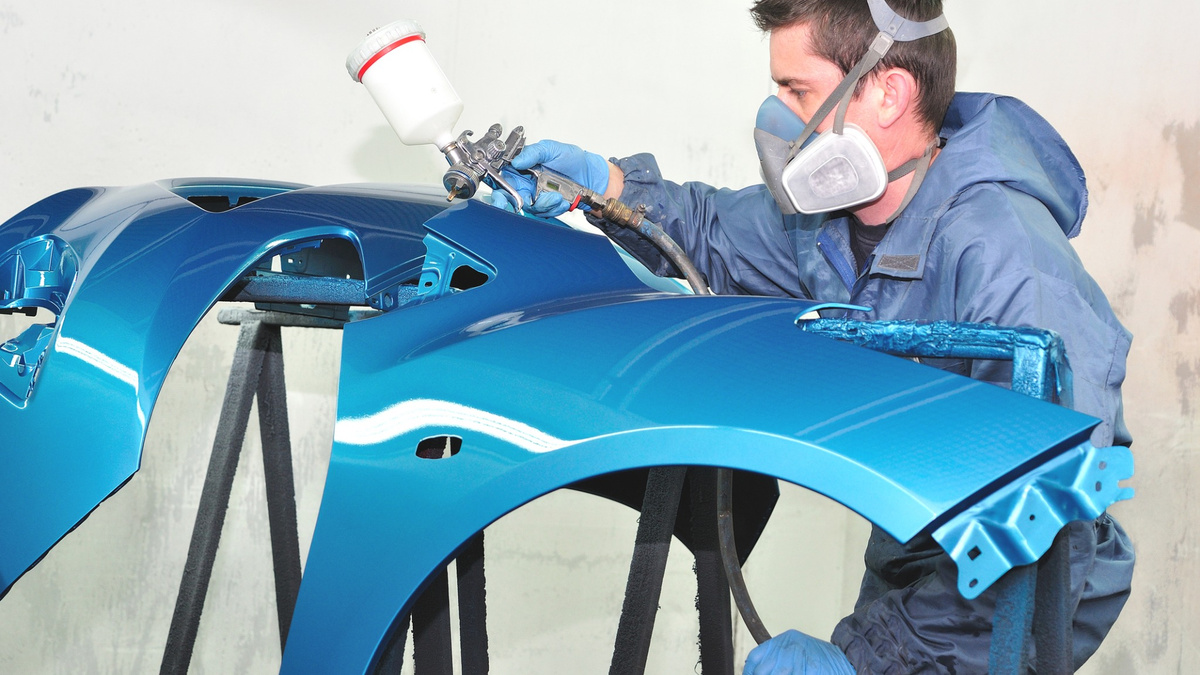
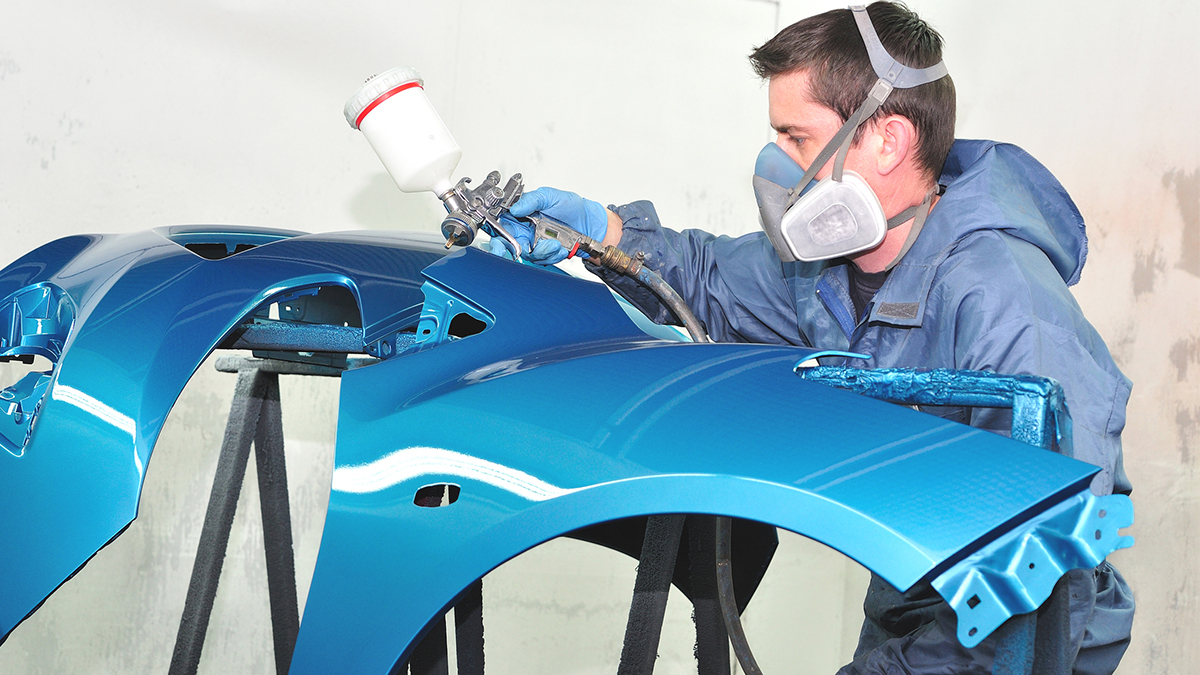
The basic raw materials comprising a liquid coating are additives, carriers, pigments, and resins. Additives make up the smallest portion of any liquid coating composition, but they impart special characteristics on the overall finish; for example, they might assist with rust prevention or UV protection. The carrier is the main liquid used to formulate the paint. The carrier can be water, solvent, or a combination of the two. Liquid coatings heavy in solvents traditionally have been the dominant form of liquid finish applied to metal parts over the years, but more interest has been directed to waterborne and high-solids coatings, which release a minimal amount of volatile organic compounds (VOCs) during application when compared to traditional solventborne coatings. Pigments play a role in final appearance and performance to some extent. As a rule, the volume of pigments influences the gloss of the film. The more pigment present, the lower the coating’s gloss. Resins act as the base of the liquid coating. They primarily govern the overall performance of the coating, helping the paint to excel for particular applications.
Liquid coating finishes can be applied in various thicknesses. Obviously, the more mils applied, the better the protection. In many instances, a manufacturer, such as an automaker, will seek to balance maximum protection with the minimum amount of paint mil thickness.
- Advantage
- Economical
The first notable benefit for liquid coating is the fact that because the paint can be applied thinly so you need less of it, which in turn makes it an economic option. Less painting material means less money and an affordable option for you!
- Variety of Choice
Liquid coating also gives a vast variety of options in more ways than one. For starters, the liquid paint has a wide expanse of color choices, including both metallics and pearls, which can give your product the flair you’ve been looking for. Liquid also comes in various specialty coats. These specialty coats include glow-in-the-dark and teflon, which are ideal for specialty markets like military, medical, aerospace, and transportation needs.
- Lower Error
When painting with a liquid spray, the occurrence of film builds lowers. More film builds means a higher chance of rejected parts and a longer production time, which isn’t ideal for anyone. With consistent and effective coating, you and your team save a substantial amount of time and money.
- Easily Markable
Sometimes, there will be sections of a piece that are not supposed to be painted and are taped off. Regular tape will not withstand the heat of the oven to keep a section paint-free on products that require baking. With liquid paint, because there is no need for an oven to set the paint, so sections can easily be marked off.
What is the powder coating?
- Introduction
Powder coatings don’t require a carrier. The additives, pigments, and resins are formulated in a powder form. To apply the material to parts, the powder is electrostatically charged and conveyed via compressed air. The charged powder is attracted to a grounded part. The part is then taken through an oven, where the heat changes the powder from a solid to a liquid and then to a solid coating. Generally, powders do not have any or extremely low VOCs.
Properly cured powder coatings can offer superior protection against chipping, scratching, UV rays, and corrosive elements. This is why powder coatings are often specified to coat metal products destined for outdoor use.
- Advantage
There are several advantages of powder coating over conventional liquid coatings:
- Powder coatings emit zero or near zero volatile organic compounds (VOC).
- Powder coatings can produce much thicker coatings than conventional liquid coatings without running or sagging.
- Powder coating overspray can be recycled and thus it is possible to achieve nearly 100% use of the coating.
- Powder coating production lines produce less hazardous waste than conventional liquid coatings.
- Powder coated items generally have fewer appearance differences between horizontally coated surfaces and vertically coated surfaces than liquid coated items.
- A wide range of specialty effects is easily accomplished which would be impossible to achieve with other coating processes.
How Does the Coating Affect the Environment?
Solventborne coatings are often specified for a finish because of their dependable performance and ability to air-dry in a matter of minutes. Unfortunately, most of the traditional liquid paint formulations from yesteryear no longer are around because of the need to reduce VOCs emitted during application.
That has led to the development of more environmentally friendly coatings, such as new waterborne formulations and high-solids coatings, that emit low VOCs. The waterborne, which have come a long way from the early versions used 15 years ago, are slowly growing in acceptance. However, some manufacturers still have reservations about applying a water-based product directly to metal. High-solids are liquid coatings that have a solids content of at least 65 percent, which means minimal solvents are present. But fewer solvents also means that the coating is more viscous. That has led to the development of multipart application systems (referred to as 2K systems if two parts are mixed, 3K if three parts are mixed, etc.) that are formulated to be mixed only seconds before application.
All finishers that apply liquid coatings spray to waste. The overspray can’t be reclaimed. If filters are used to capture the overspray, the finisher has to dispose of the filters according to regulations established by local authorities.
The powder booth does not require exhaust. As stated previously, if any VOCs are emitted during the powder coating process, they are typically very low.
Powder coatings can be recycled with the right reclamation equipment. Companies looking for Class A finishes have reclamation systems that depend on thorough cleaning and maintenance because any cross-contamination of reclaimed material ruins the original material’s ability to deliver a specific color.
Again, the disposal of unreclaimed powder coating material is governed by local regulations. In some instances, local law may require disposal in sealed containers or require that the powder coating material be baked into the form of brick for disposal in a local landfill.


(4059)(20260924)(原).jpg)
(2367)(20260924)(原).jpg)